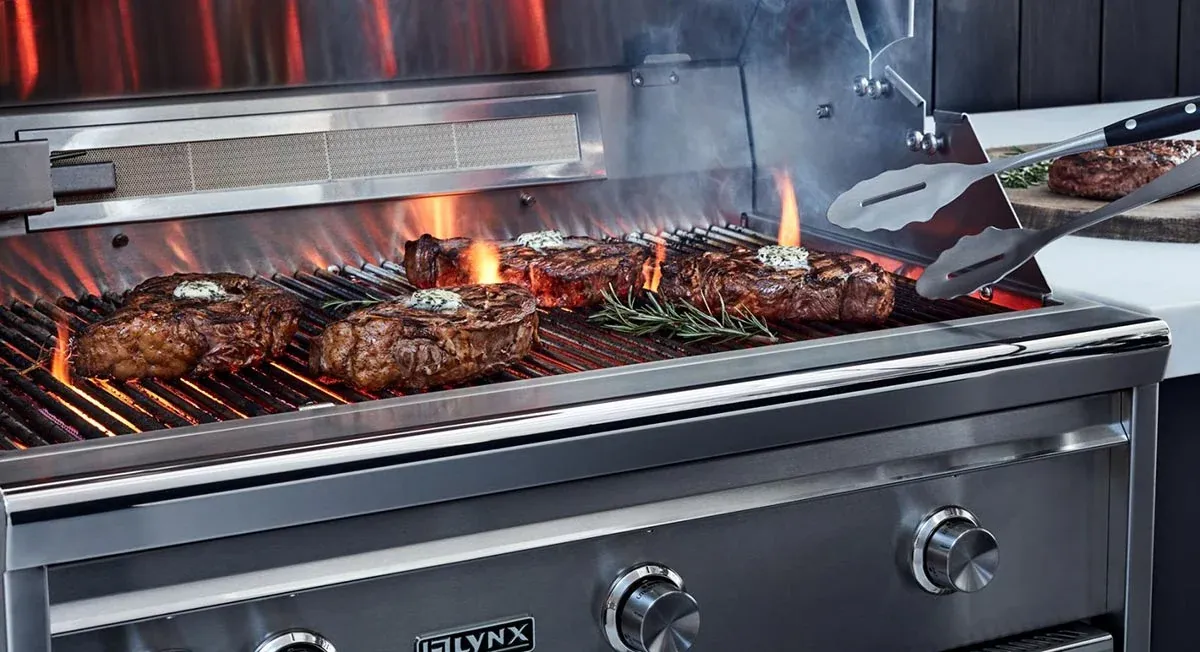
Weber in a nutshell
Weber started with the charcoal kettle in the 1950s outside Chicago, and it's still the shape most people picture when they hear "grill." On the gas side, the lineup most homeowners have is the Spirit (entry), Genesis (the mainstream workhorse) and Summit (the top line, including built-in versions). Weber also makes pellet grills and flat-top griddles.
The signature part inside a Weber gas grill is the Flavorizer bar: an angled metal tent over each burner that catches drippings, vaporizes them into smoke, and protects the burner. Below that, grease channels down to a slide-out tray and a disposable catch pan. The system works well when it's clean and causes flare-ups and grease fires when it isn't.
What we see on Weber grills
- Rusted Flavorizer bars and burners. On older grills the bars rust through and the burner tubes corrode, especially near the coast. These are wear parts and are made to be replaced. See heat plate and Flavorizer replacement.
- Igniters that stop clicking. On many models it's the battery in the push-button igniter, a loose wire, or a worn electrode. See igniter replacement.
- Low flame on propane. Often the regulator's safety device has tripped from opening the tank too fast. Our low flame page explains the reset.
- Grease fires. A full catch pan and a grease tray that hasn't been scraped in a year.
- Spiders in burner tubes on grills that sat over winter.
How we clean a Weber
Grates and Flavorizer bars come out and get scraped and degreased. We pull the burners where the design allows (on many newer Genesis and Spirit models they slide out easily), clear the ports, and brush the venturi tubes. The cookbox gets scraped down into the grease tray, which we then empty and clean along with the catch pan holder. On carts, the cabinet gets wiped out, since grease and rodents end up in there. Everything is done with biodegradable degreasers, and dirty rinse water is collected rather than poured onto your patio. See BBQ grill cleaning.
Parts and model numbers
Weber parts are about as easy to get as grill parts get, both original and aftermarket. That makes repairing a Weber with a sound cookbox and frame a good value. To order the right parts, you need the serial number. On many Weber gas grills the serial label is a sticker on the frame, inside the cabinet door, or on the back or side of the cookbox; it varies by model and year. Our model and serial guide covers where to look. When the cookbox or frame is rusted through, replacement is usually the better call.
Weber questions
Is my old Genesis worth fixing?
If the cookbox and frame are solid, yes. Burners, Flavorizer bars, grates and igniters are all replaceable and reasonably easy to get.
Why does my Weber only get to low heat on propane?
Usually the regulator went into low-flow mode. Turn everything off, disconnect the tank, wait a minute, reconnect, and open the tank valve slowly. If it's still low, call us.
Are you a Weber authorized service center?
No. We're an independent, insured grill company. Warranty claims go through Weber.
Do you work on Weber kettles and griddles?
We clean kettles and Weber griddles. See flat top griddle care for tips between visits.
Related guides
How Often Should You Clean Your Grill?
A realistic cleaning schedule for gas grills in LA: what to do after every cook, once a month, and once or twice a year, and what shortens the interval.
TroubleshootingSigns Your Burners Need Replacing
How to tell a dirty burner from a worn-out one, with flame patterns to watch for and a safe way to pull and inspect them.
Buying adviceRepair or Replace Your Grill?
A practical way to decide whether your grill needs a few parts or a replacement, based on what techs actually check first.
Buying adviceFreestanding vs. Built-In Grills
How freestanding cart grills and built-in island grills compare on flexibility, installation, gas supply and long-term care.
Weber cleaning and repair
Call or text, or send a couple of photos, and we'll get back to you with a quote.